1. Introduction: L'évolution de la technologie des feux de circulation
Les systèmes de feux de circulation sont l'épine dorsale de la gestion du trafic urbain, assurant l'ordre et la sécurité aux intersections du monde entier.économes en énergieAu cœur de cette évolution se trouve un élément essentiel: la LED 3528 à lentille dôme.Cette technologie d'éclairage compacte mais puissante transforme la façon dont les municipalités et les autorités de transport abordent la conception et le déploiement des signaux de circulation.
2Qu'est-ce qu'une LED à lentille à dôme 3528?
Le 3528 SMD (Surface Mount Device) LED tire son nom de ses dimensions de boîtier compact 3.5 mm * 2.8 mm et représente l'un des formats LED les plus polyvalents disponibles sur le marché de l'optoélectroniqueLorsqu'elle est équipée d'une lentille à dôme, cette LED acquiert des capacités de mise au point optique considérablement améliorées.amélioration spectaculaire de l'intensité lumineuse et de la plage de visibilité effective par rapport aux conceptions LED classiques à plateau.
3Les principaux avantages pour les applications de feux de circulation
3.1 Brillance supérieure et uniformité optique
Les LED 3528 offrent une luminosité exceptionnelle avec une uniformité lumineuse exceptionnelle sur toute la face du signal éclairé.où chaque conducteur qui s'approche, quel que soit l'angle de vue,La couleur et l'état du signal doivent être perçus clairement et instantanément. La conception de la lentille à dôme minimise la dispersion de la lumière hors axe, ce qui garantit que le rouge, le vert,et les indicateurs jaunes restent nettes et sans ambiguïté même sous la lumière directe du soleil intense à midi.
3.2 Efficacité énergétique remarquable
Par rapport aux ampoules traditionnelles à incandescence, les LED à 3528 lentilles à dôme réduisent la consommation d'énergie jusqu'à 85%.Un module de signal de circulation à incandescence standard de 100 watts peut être remplacé efficacement par un ensemble LED de 10 à 15 wattsPour une ville gérant des milliers d'intersections, la durée de vie du signal est généralement de 7 à 10 ans.les économies cumulées représentent un argument économique convaincant en faveur de la conversion des LED.
3.3 Durée de vie opérationnelle prolongée
Avec une durée de vie nominale supérieure à 50 000 heures, les LED à lentille à dôme 3528 dépassent considérablement les alternatives à incandescence qui nécessitent généralement un remplacement après seulement 8 000 à 12 000 heures.Cette longévité se traduit directement par une fréquence de maintenance réduite, des dépenses de main-d'œuvre sur le terrain plus faibles et des perturbations de la circulation nettement moindres causées par des pannes de signal inattendues pendant les heures de pointe.
3.4 Résistance aux intempéries et fiabilité environnementale
Les feux de circulation doivent résister à des conditions environnementales extrêmes: fortes pluies, accumulation de neige, poussière soufflée par le vent,et des fluctuations de température ambiante allant de moins 40 °C à plus 85 °CLes LED à lentille à dôme 3528 de qualité supérieure, telles que celles fabriquées par des spécialistes de l'industrie tels queDongguan Lanjin Optoélectronique Co., Ltd., sont conçus avec des matériaux d'encapsulation de haute durabilité qui offrent une excellente protection contre la pénétration de l'humidité et la dégradation à long terme du stress thermique.
4Comparaison des performances techniques
| Paramètre | 3528 Lentille à dôme LED | L'incandescence traditionnelle |
|---|
| Consommation d'électricité | 0.06 | 50 à 150 W par ampoule |
| Durée de vie nominale | 50Plus de 1000 heures | 8, 000 12 000 heures |
| Temps de réponse | < 1 ms | 100 à 200 ms |
| Efficacité lumineuse | 80 ¢ 120 lm/W | 10 ¢ 15 lm/W |
| Contrôle du faisceau (lentille à dôme) | 30° ∼ 60° de mise au point | Omnidirectionnel (requiert un réflecteur) |
| Émission UV / IR | Aucune | - C'est très important. |
5Le secteur: Dongguan Lanjin Optoelectronics Co., Ltd.
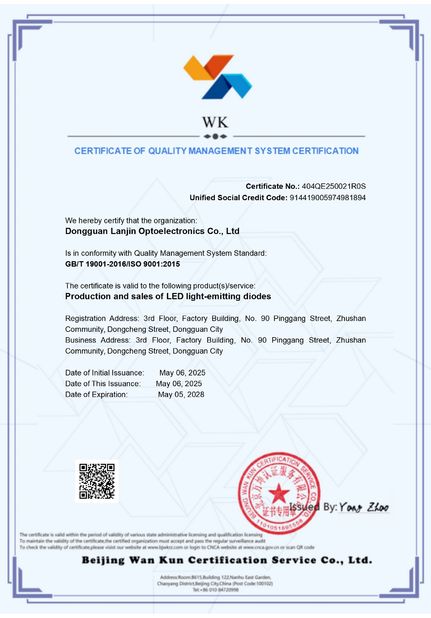
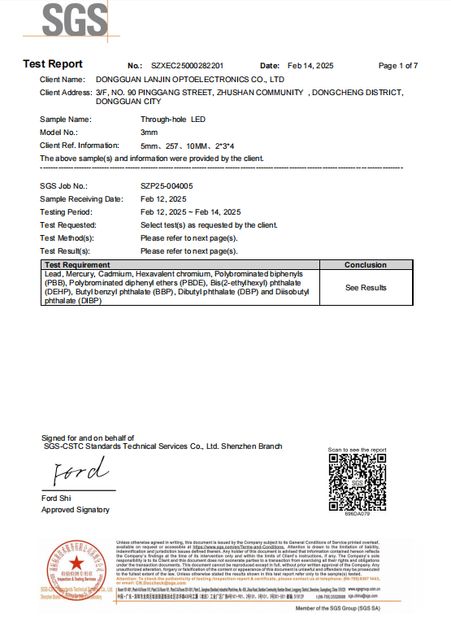
Au fur et à mesure que les autorités de transport et les fabricants d'équipements de circulation dans le monde entier modernisent leurs infrastructures vers des systèmes à LED,Le partenariat avec des fournisseurs de composants expérimentés devient une décision critique.Dongguan Lanjin Optoélectronique Co., Ltd.est un nom reconnu dans l'industrie des composants LED, spécialisé dans les LED SMD de haute fiabilité, y compris la série de produits 3528 de lentilles à dôme.Les procédés de fabrication de l'entreprise intègrent une technologie de revêtement au phosphore avancée qui assure un rendu des couleurs cohérent à travers les lots, et chaque série de production est soumise à des tests photométriques et de durabilité rigoureux afin de vérifier la pleine conformité avec les exigences strictes des applications de signalisation routière. System integrators and module manufacturers developing next-generation traffic light solutions can leverage Lanjin's technical expertise and dependable quality control to build signal systems that perform reliably year after year under real-world conditions.
6Applications au-delà des signaux d'intersection
Alors que les feux de circulation de croisement classiques représentent le scénario de déploiement le plus reconnu, les LED 3528 à lentille de dôme remplissent une gamme diversifiée de rôles de signalisation et d'indication:
- Signaux de compte à rebours des passages pour piétons
- Indicateurs d'avertissement des passages à niveau ferroviaire
- Signes de signalisation et de contrôle de voie
- Systèmes de guidage de piste et de piste d'aéroport
- Balises de navigation maritime et de navigation intérieure
7Le futur: des panneaux de signalisation intelligents et adaptatifs
L'évolution technologique des applications LED de 3528 lentilles à dôme continue de s'accélérer.Les tendances émergentes comprennent les signaux de circulation adaptatifs intelligents qui ajustent de manière autonome les cycles de chronométrage en fonction des données de flux de trafic en temps réel collectées à partir de capteurs intégrés sur la route et de réseaux de caméras.Ces systèmes intelligents utilisent des panneaux LED capables de s'assombrir pendant les heures de nuit où il y a peu de circulation pour une conservation supplémentaire de l'énergie.ou augmenter instantanément la luminosité de sortie dans des conditions météorologiques défavorables telles que le brouillard ou la pluie.En outre, l'intégration avec l'infrastructure IoT municipale permet de surveiller à distance la santé des différents éléments LED,permettant une planification prédictive de la maintenance avant toute dégradation visible du signal.
8Conclusion
La LED 3528 est une technologie de base dans la modernisation mondiale des systèmes de feux de circulation.durée de vie opérationnelle exceptionnelle, et sa résistance aux intempéries prouvée en font le choix préféré des autorités de gestion du trafic dans le monde entier.Dongguan Lanjin Optoélectronique Co., Ltd.En fournissant au marché des LED de qualité rigoureusement assurée, la voie vers des infrastructures de mobilité urbaine plus sûres, plus intelligentes et plus durables pour l'environnement est plus brillante que jamais.


 Votre message doit contenir entre 20 et 3 000 caractères!
 French